
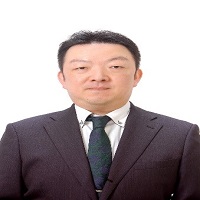
Kiyoshi Hotta
University of Human Environments Graduate School, Japan
Abstract Title: Perceptions and practices regarding feeding by nurses providing artificial nutrition and hydration
Biography:
Kiyoshi Hotta completed his master’s degree in Nursing Science at the Graduate School of Medicine, Nagoya University, Japan. He is currently an Assistant Professor at Chubu University, Japan, and a doctoral student in the Graduate School of Human Environment Studies, University of Human Environments, Japan. His research interests include gerontological nursing, dementia care, and nursing skills.
Research Interest:
Aim: For people, having a ‘meal’ is not just for nutrition intake, but it provides mental well-being through mealtime satisfaction, and serves as a social function by promoting communication with others, including other family members. There are approximately 80,000 older adults with artificial nutrition and hydration in Japan, and many of them are hospitalized or living in care facilities, making the role of nurses who provide care important. This study aims to clarify the perceptions and practices regarding feeding by nurses who provide artificial nutrition and hydration for older adults.
Methods: A self-administered questionnaire survey was conducted with 60 nurses working in long-term care wards of three hospitals (collection rate: 57.7%). Demographic data include age, sex, and length of nursing experience. An open-ended question about the perceptions and practices regarding feeding was ‘What do you think about feeding and what kind of nursing care do you provide as feeding assistance when providing artificial nutrition and hydration for older patients?’ Using a KH Coder (ver. 3.0), a tool for quantitative content analysis and text mining, we analyzed the text data sentence by sentence, and interpreted the meanings based on Krippendorff's (1980) content analysis method.
Results: The nurses’ mean age and years of experience were 42.8 years and 21.6 years, with 56 female nurses (93.3%). Nurses' perceptions of feeding included Meals for living as human beings, Nutrition intake to sustain life, and Conflicts between meals and nutritional intake. The nursing practices included Safe administration procedures, Attentive encouragement, Support for oral intake, and Collaboration with families and other interprofessional team members.
Conclusions: Some nurses perceived the feeding assistance for artificial nutrition and hydration as meals for patients. Others felt conflicts between meals and nutritional intake. Nurses providing feeding assistance ensured safe administration procedures and helped patients consume orally as much as possible.
Keywords: Artificial nutrition and hydration, Nurse, Older adults, perceptions of feeding.